One brand. A hundred different front doors.
Restaurant / Franchise marketing
Central teams need consistency. Operators need useful local assets. The answer is not giving every location a blank template or forcing everyone to run the same promotion.
The starting point
Scale the idea centrally. Make the last metre accurate locally.
Give every location the same reason to care.
Begin with the hero product, proposition and customer action: try a new item, order a bundle, visit a new restaurant or return for a seasonal promotion. Fix these centrally before shooting content or producing formats.
A national campaign needs enough discipline to stay recognizable and enough flexibility to fit legitimate local differences. Define the fixed elements—brand assets, visual idea, approved copy and product claims—and the variable elements before production starts.
Lock the master brief
One product truth, one campaign proposition, one primary action and an approved source of truth for offers.
Define local variables
Participating location, menu or product availability, price, language, opening date, legal notices and ordering links.
A template is not a toolkit.
Operators rarely have time to interpret a national creative deck. Give them finished, approved files with clearly named sizes, launch dates, captions and instructions. Reserve editable fields only for details they are authorized to change.
Choose the versioning model to match the network. A small footprint may use manually approved local variants. A larger one may need a structured asset library, data feed or documented workflow. The important thing is that local changes are reviewed without breaking the master campaign.
Build a location matrix
Track each restaurant's assets, offer, availability, hours, destination and approval status.
Package ready-to-publish files
Include social, paid, menu board, in-store and landing-page versions where the actual campaign requires them.
Shoot the product once. Plan for every destination.
A restaurant shoot should capture the hero image first, then the movements, textures and formats needed by short-form video, menus, digital ads and local channels. The extra value comes from production planning, not from making every restaurant film its own version.
Create a deliberate list of crop, motion and language requirements before shoot day. Versioning a campaign after the fact is usually less efficient and can leave locations using weak or off-brand assets.
Design the master shot list
Hero product, product details, assembly, customer use, vertical video, stills and format-safe compositions.
Agree on adaptation rules
Who can change price, store name, promotion terms, product image and copy—and who signs off?
The campaign is only live when customers can act on it.
Confirm that the featured item or promotion is available in the participating restaurant and discoverable in the app, website or ordering flow. Make local hours, addresses and offers consistent across the ad, landing page and store.
Measure location-level readiness and campaign response separately from sales. Orders, redemptions and repeat visits are useful when reliably available; social engagement by itself cannot tell you whether a franchise campaign worked commercially.
Run the launch preflight
Check menu availability, prices, destinations, participation, opening hours, campaign end dates and creative approvals.
Keep an exceptions log
Record which locations could not launch, why, and what the next national program should do differently.
Relevant published work
The work matters more than the promise.
These projects illustrate relevant Grid disciplines. They are not claims of measured sales results or proof of services outside the published project scope.
Mary Brown's
Digital Video
Published restaurant campaign video demonstrating Grid's food-led creative production.
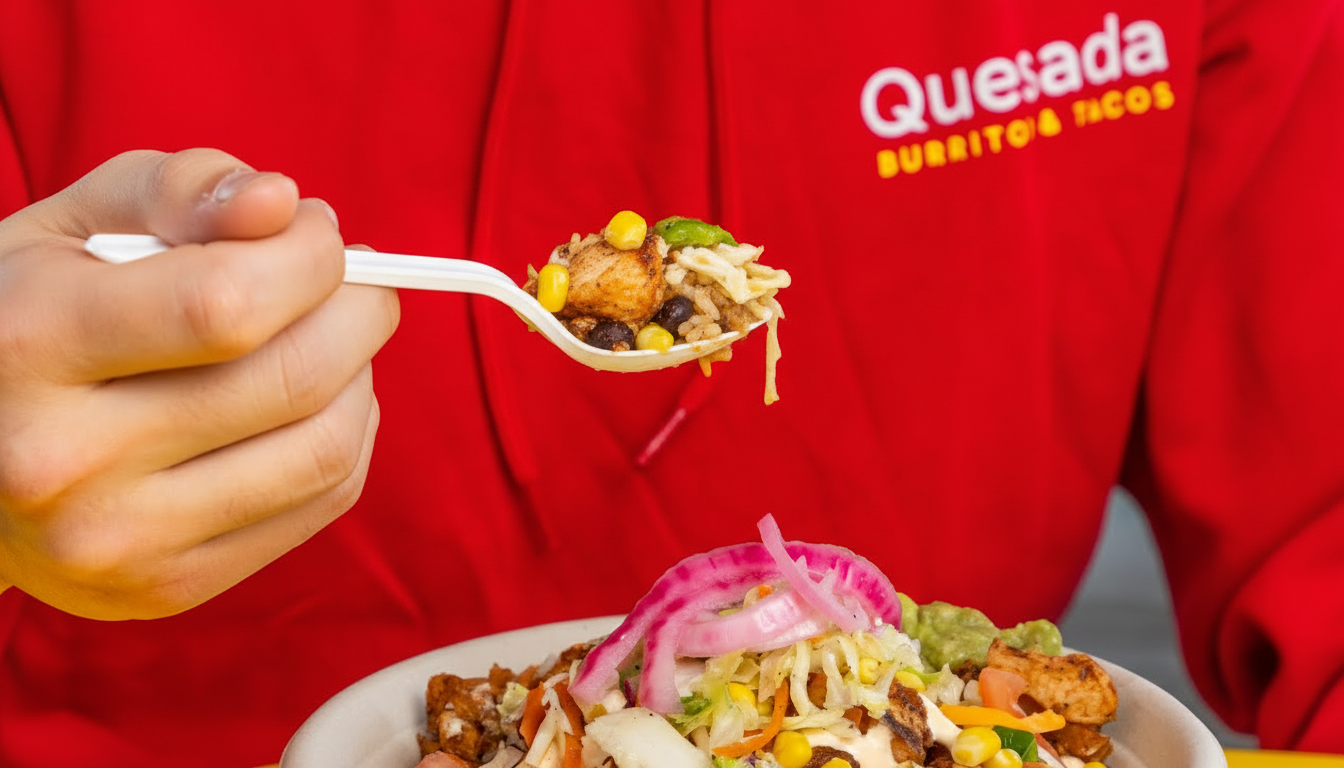
Quesada
Content Creation
Food and product content work relevant to coordinated brand campaigns.
Osmow's
Digital Video
Another published QSR creative example, without implying documented location-by-location performance.
Questions worth asking
How can franchises stay on brand without removing all local flexibility?
Define a central campaign idea and a limited set of approved local variables. Give operators finished assets and a clear process for the situations that need exceptions.
What should be approved nationally versus locally?
National teams should own the product story, main creative, brand assets and claims. Local owners can verify participation, inventory, price, timing, address and availability where they have authority. Escalate conflicts before publishing.
Can a franchise campaign work with different menus?
Yes, if the participating menu items and substitutions are planned in the brief. Do not advertise a single nationally uniform item when regional availability differs.
Does Grid work with multi-location restaurant brands?
Yes. Grid's published restaurant work includes Mary Brown's, Quesada and Osmow's, and the team can scope connected campaign, content, local toolkit and launch support.