The retailer said yes. Now give shoppers a reason to.
CPG / Retail growth
Distribution creates the opportunity to be bought. It does not create demand by itself. Before spending on awareness, connect the product, the shelf, the retail assets and the campaign to one clear reason to choose you.
The starting point
A listing is the start of a commercial job, not the end of the pitch.
Confirm what will actually be on shelf.
Start with the retailer, store group, participating locations, product variants and expected on-shelf dates. A national-looking launch can waste money if only a limited set of stores has stock. Align the consumer message to availability that the retailer or distributor can confirm.
Separate a marketing problem from an operational one. If the product is out of stock, mislisted or difficult to locate, more impressions cannot solve it. Establish a single owner for retailer assets, inventory signals, product information and approval.
Build an availability map
Store groups, launch windows, confirmed SKUs and shopping links. Note what is still unconfirmed.
Check the product page
Verify pack images, product names, variant information, claims and retailer-search discoverability before sending traffic.
Five seconds to understand the product.
A shopper does not see the brand deck. They see the package alongside competitors, often while making a quick choice. Test whether the brand, product type, variant and most defensible reason to buy can be understood at a glance.
Use an actual shelf context, not only isolated package renders. The product must also read clearly in retailer thumbnails, price cards and mobile shopping results. If the value proposition disappears in those environments, fix the hierarchy before scaling media.
Run a shelf-distance check
Show the pack alongside the category and ask someone unfamiliar with the brand what it is and why it is different.
Audit retailer imagery
Check hero pack shots, secondary visuals, claims approvals and mobile thumbnails in each retail listing.
Make the reason to care the reason to buy.
Bring the packaging idea into the actual shopper journey: point-of-sale, retailer media, creator content, sampling, paid social and product landing pages. Different formats can have different executions without sounding like different brands.
Define an action for every asset. Some should explain the proposition, some demonstrate the product, and some make it easy to locate or try it. A beautiful film that never connects to where the product is sold is only part of the job.
Build a launch asset matrix
List each channel, required crop or format, key message, approval owner and final destination.
Make trials useful
Sampling and creators should give the shopper a specific product experience and a clear next step to find it.
Watch for what the campaign cannot fix.
Look at the evidence you can actually obtain: retailer availability, campaign interactions, coupon or sampling response, retailer reporting where available, shopper questions and repeat objections. Sales velocity data is not always accessible at the brand level, so be explicit about what is and is not measured.
If awareness is rising without movement, investigate availability, price perception, message clarity and retailer execution before simply increasing spend. Capture what you learn as a repeatable playbook for the next SKU or retail banner.
Review weekly exceptions
Which products are missing, links are broken, claims need approval or locations cannot execute?
Track commercial outcomes
Use retailer sell-through data where available; otherwise label proxy measures honestly rather than presenting them as sales.
Relevant published work
The work matters more than the promise.
These projects illustrate relevant Grid disciplines. They are not claims of measured sales results or proof of services outside the published project scope.
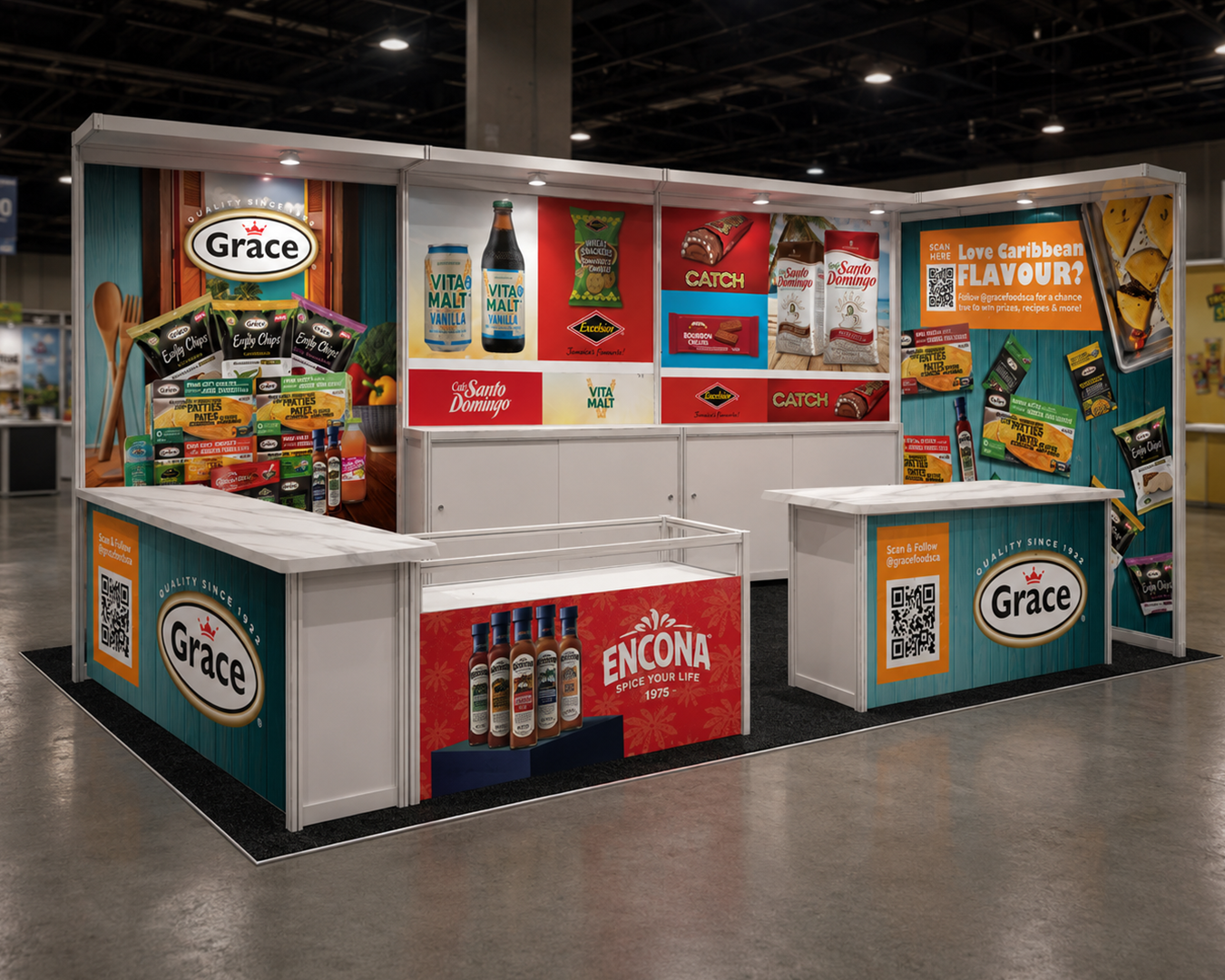
Grace Foods
SIAL Trade Show
Published trade activation experience illustrates how a product story needs to carry into a physical buying context.
Elements
Packaging Redesign
A relevant example of packaging work and the importance of a clear product system.
Neal Brothers
Keep It to Yourself
Creative work that puts the product at the centre of a memorable consumer story.
Questions worth asking
Should we advertise as soon as a retailer approves the listing?
Not automatically. Align the campaign with confirmed availability, correct retailer listings and approved product information first. A precise regional launch can be more useful than a broad campaign that sends people to empty shelves.
Does every retailer need separate creative?
Not a separate brand idea. Build one consistent campaign platform with specific versions for retailer media specifications, participating stores, offers, claims and timing.
What if our distributor will not share sell-through numbers?
Request the most useful available signals, such as store coverage, replenishment feedback or retailer reporting. Track marketing response separately and avoid calling reach, clicks or sampling counts verified retail sales.
Can Grid handle packaging and retail launch work together?
Yes. Grid can connect positioning, packaging, shopper creative, campaigns, photography and activation, or take responsibility for one clearly defined gap.